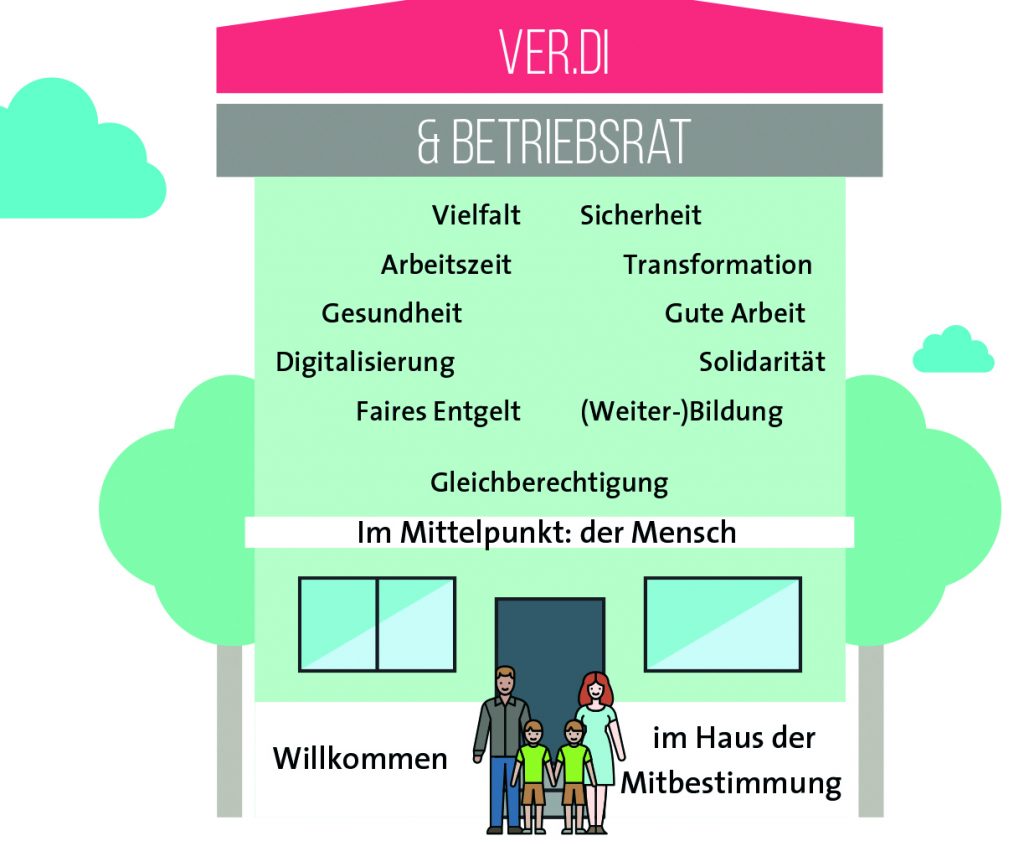
Why is ver.di on the works council?
 In our working world, trade unions and works councils have different tasks, but in many ways they complement each other.
The trade union takes care of everything that applies across the industry or across the country (through collective agreements: among other things, the level of collectively agreed salaries, the 13th month’s salary (Christmas bonus), Saturday work in the RBC, days off 24.12. and 31.12., time off for special occasions, overtime pay, etc.) and we as a works council regulate many things locally (e.g.: through works agreements: among other things, working hours, pay for AT employees, etc.).
With the union we are stronger than alone!
- ver.di negotiates collective agreements and influences laws
- members can count on the protection of ver.di
- ver.di advises and represents members free of charge
- ver.di members have access to free social and political education (educational leave)
- ver.di offers workers’ representatives the right qualifications to negotiate with employers at eye level
- ver.di stands up for good collective agreements, for justice, equal rights and against racism in the workplace and society!
Did you know that collective agreements can regulate more than the law?
| By Law | Banking Collective Agreement | |
|---|---|---|
| Working Time | 48 hrs/p.w. (exceptionally max. 60 hrs/p.w.) | 39 hrs/p.w. max.45 hrs/p.w. in exceptional cases) |
| Holiday | 20 Days for five-day workweek | 30 Days and five-day workweek |
| Remuneration | Minimum wage planned 12€ / h (< 1.200 PM for 39 hrs/p.w.) | Remuneration according to collective agreement (TG 6 ca. 3.000 – 4.000 € PM depending on the year) |
 Information on the current round of collective bargaining can be found at: www.wir-fuer-tarif.de
 Joachim Fehmel:
Fair pay is particularly important to me in works council work. That is what I stand up for as a works council member.
Unfortunately, we have the least rights in this area. The legislator has put the issue of fair pay in the hands of the trade unions, because only they can use the necessary leverage (industrial action) to be successful at the negotiating table.
That is why, in addition to my work on the works council, I volunteer as a judge at the Berlin Labour Court and in the negotiating commission of ver.di for the collective agreement of the private banking industry.
The Federal Labour Court once wrote that collective bargaining without the possibility to strike would be collective begging. Therefore, talking at the negotiating table is one thing, but without the actions of workers/members it is nothing.
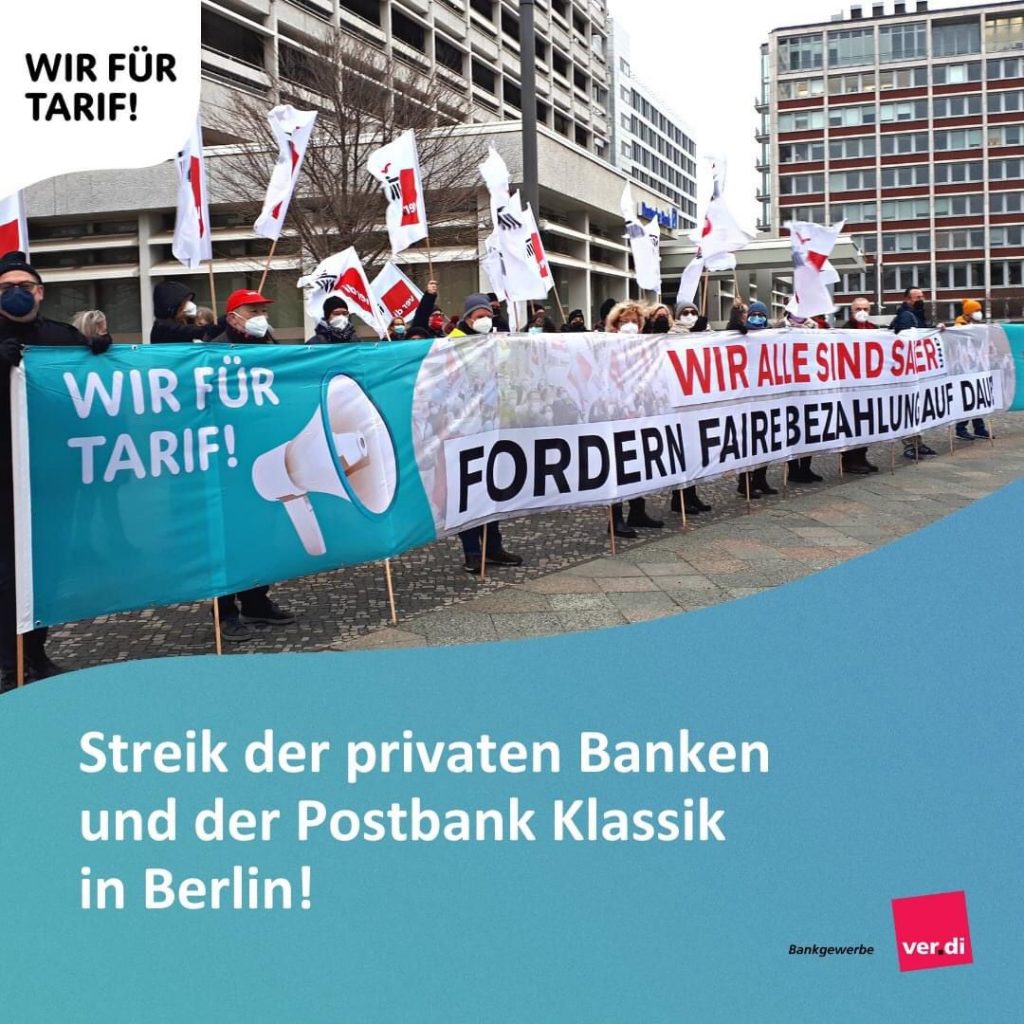
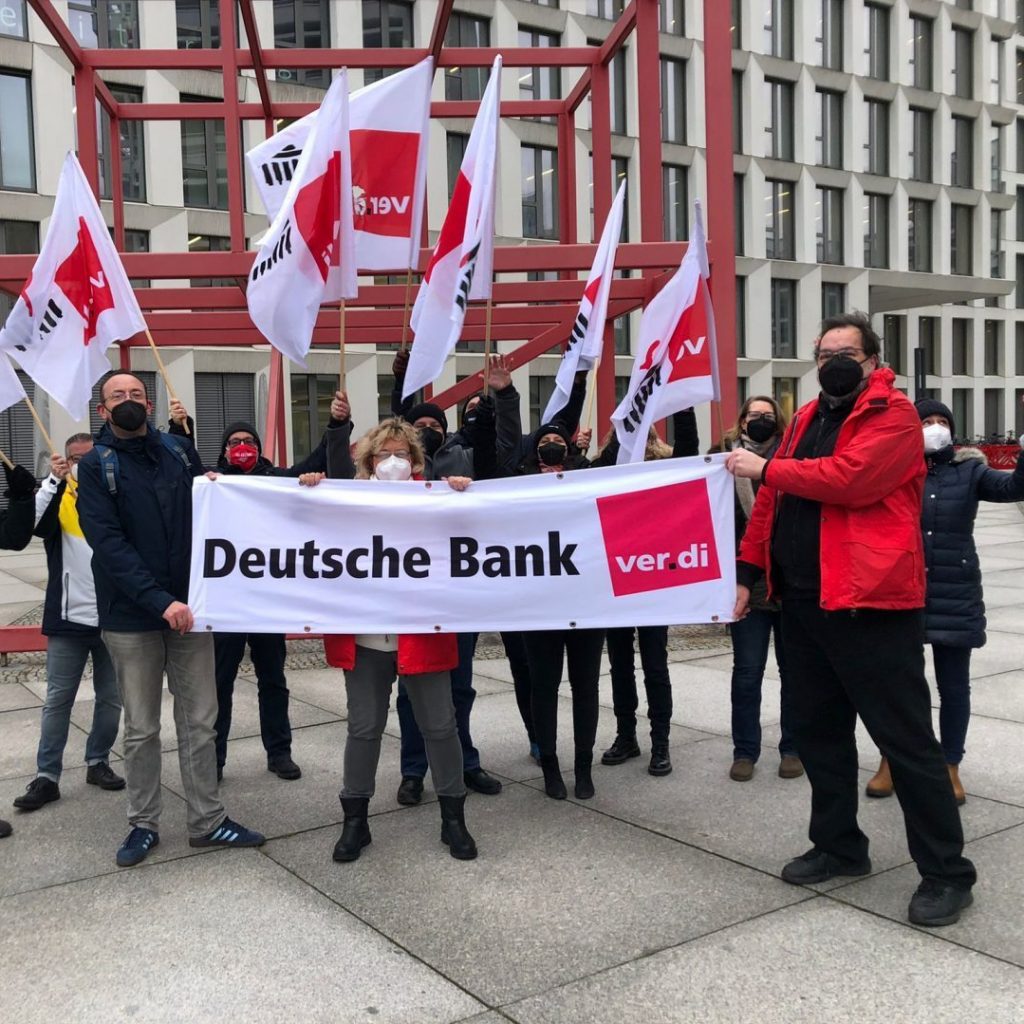
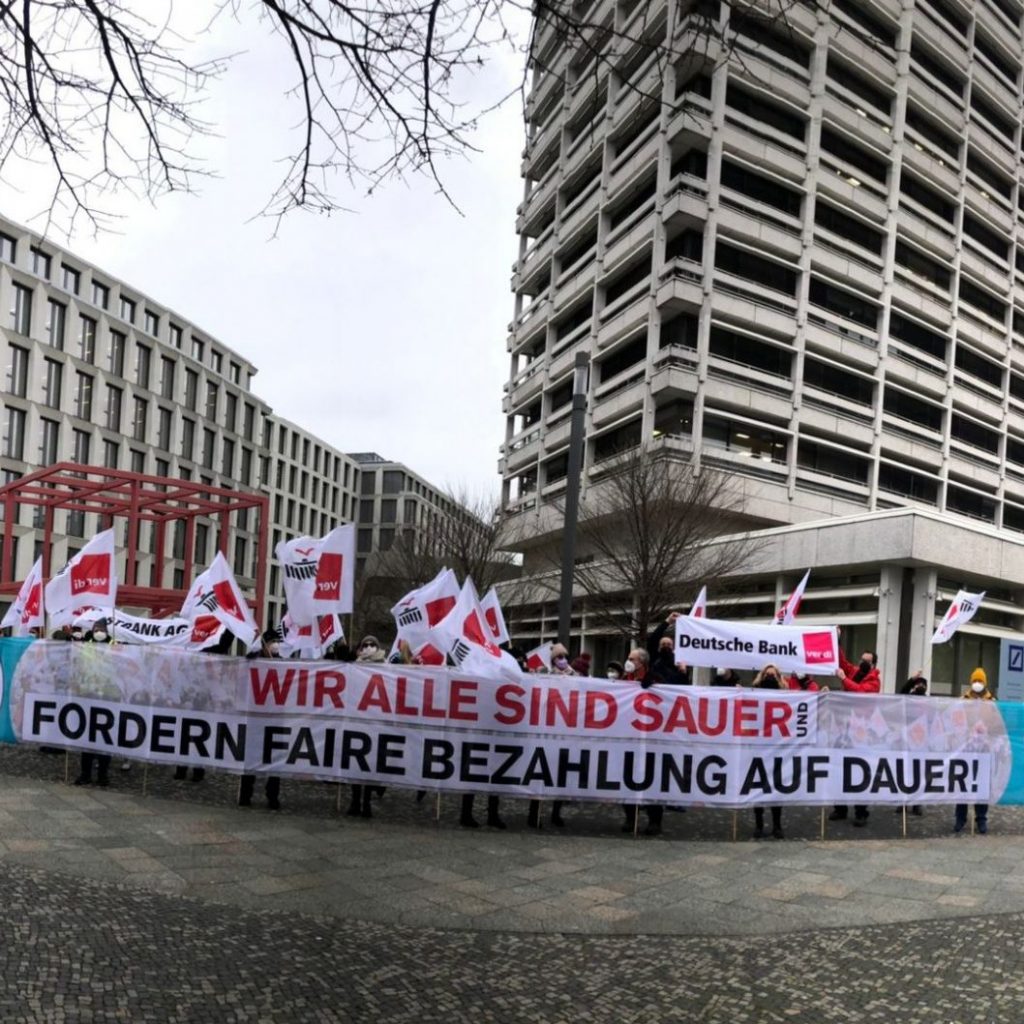
Why is ver.di important to you at Deutsche Bank?
Why is ver.di important in the works council?